Environment
To help get ahead of disease and deliver real human health impact we need to look broadly and deeply at the interconnections of climate, nature and health.
We’re committed to a net zero, nature positive, healthier planet, with ambitious goals set for 2030 and 2045.
Scientific evidence is increasingly demonstrating how climate change and nature loss are impacting the world and human health. For example, human health is under threat from air pollution, diseases that pass from animals to humans and threats to water security. Climate and nature changes are testing the resiliency of healthcare systems.
As a global biopharma leader, addressing our environmental impact is fundamental to our purpose. That’s why we have set ambitious climate and nature targets.
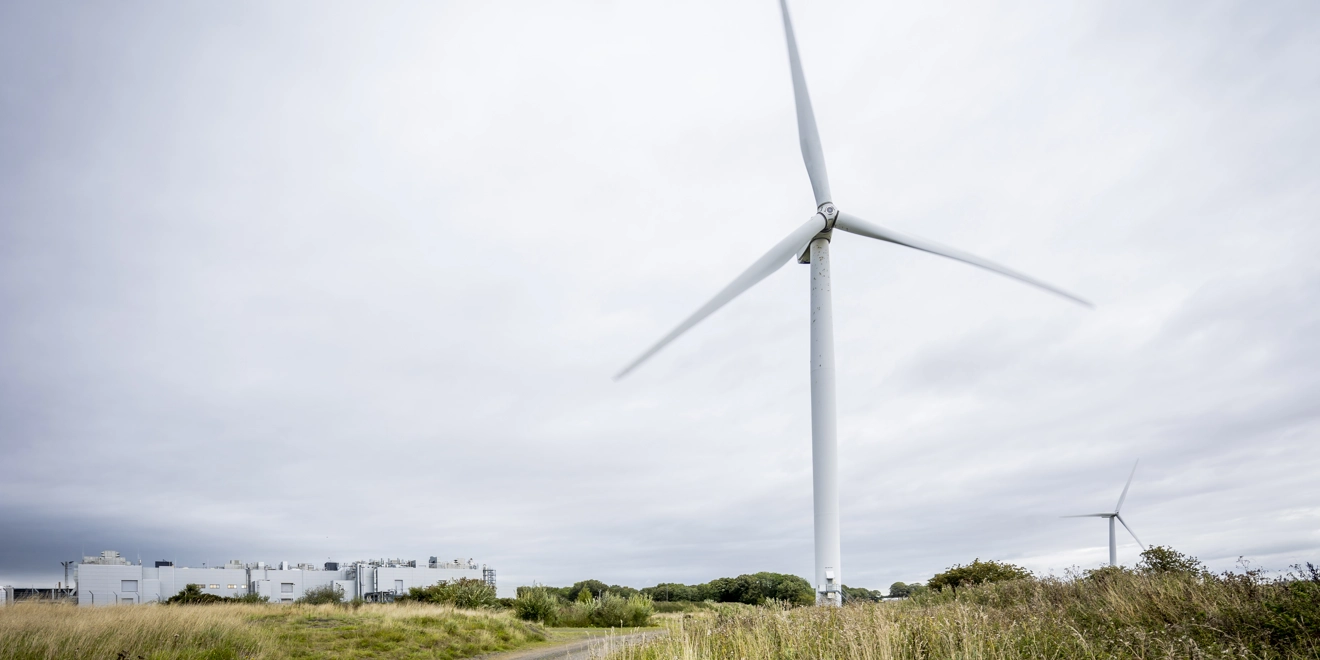
Climate
By 2030 we'll have a net zero climate impact.
With regard to energy, our objectives are as follows:
greenhouse gas emissions across our full value chain by 2045
Net 0renewable imported and generated electricity by 2030
100%
We've established the Energy Reduction & Transition Program, a multi-year investment plan designed to meet our ambitious sustainability goals. This involves replacing old buildings or extensively renovating them with more efficient technologies, alongside continuous optimisation of other units to enhance their energy performance.
Compared to our 2020 baseline, carbon emissions from our Belgian sites have already seen a significant reduction of 55.2% by the end of 2025, moving us closer to our 2030 target of an 80% reduction. We're actively working to bridge the remaining gap, with a key focus on decarbonising heat through heat pump installations and electrifying part of our steam production.
We are a signatory to the Walloon Government's Carbon Conventions. These contracts, in place since 2002, commit us to ambitious and sustainable improvements in energy efficiency, CO2 emission reduction, and increasing our proportion of renewable energy.
GSK Wavre: Quality certified "My Green Lab"
Committed to sustainability, our Quality Control (QC) laboratories in Wavre have obtained the prestigious "My Green Lab" certification. This major achievement highlights our dedication to environmental responsibility and our continuous efforts to reduce the impact of our operations, while ensuring the quality of our vaccines and medicines.
Sustainable and soft mobility
At GSK, we are committed to reducing our carbon footprint, particularly in terms of mobility. In 2026, our vehicle fleet consisted of 50% hybrid vehicles and 42% fully electric vehicles. Our ambition is to achieve zero CO2 emissions by the end of 2030, with a 100% electric fleet.
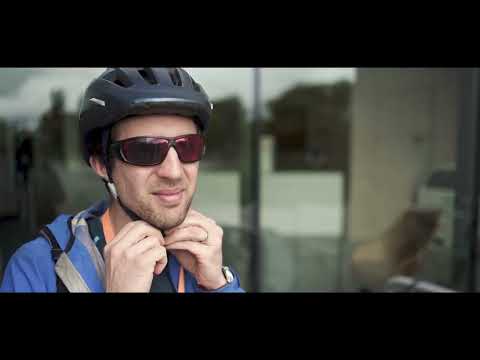
In parallel, we have implemented a soft mobility policy at our sites. We actively encourage cycling, carpooling, and the use of public transport, and have put in place the necessary infrastructure to support them. A vast network of charging stations for electric cars has also been installed.
Mobility at GSK Belgium
Freshwater
By 2030 we'll have a net positive impact on nature.
With regard to water, our objectives are as follows:
reduction overall water use in our operation by 2030
20%good water management at all our sites
100%
We are proud to announce that water consumption at our Belgian sites has seen a significant decrease, reaching 24.5% by the end of 2025 compared to our 2020 baseline. This positive result already surpasses our 20% reduction target for 2030.
This achievement was made possible through a series of optimisation projects. Looking ahead, a wastewater treatment and recycling project in Wavre is under consideration, aiming to reduce consumption by 200,000 m³ per year once operational by the end of 2029. We are also prioritising improved measurement to better understand and manage consumption.
To further enhance our water management, we continue to use the best available technologies and optimise cleaning processes in our production units to reduce consumption. We promote the natural infiltration of rainwater into the soil by limiting impermeable surfaces as much as possible and by favouring, where possible, natural arrangements conducive to water infiltration. The Wavre site already has two lagooning basins that collect a significant portion of the rainwater.
Waste
All our waste will be recycled and reused by 2030.
Our two key areas of focus for waste management:
reduction of waste by 2030
10%operational waste, including single plastics by 2030
Zero
We are making excellent progress in waste management at our Belgian sites. Compared to our 2020 baseline, our waste production has already seen a significant reduction of 26.3% by the end of 2025, surpassing our 20% target for 2030.
This achievement is the result of various reduction projects, including the revision of material lists in certain units, and a cultural shift towards more responsible waste management practices, supported by awareness and training actions.
Our waste circularity rate has also progressed, reaching 50% by the end of 2025. We are committed to managing our waste responsibly, and for over 20 years, our waste has not been sent to landfill. Our strategy prioritises reducing the quantity of waste, followed by reuse, and then recycling. Since 2021, these efforts have allowed us to recycle an additional 272 tonnes of waste per year, improving our sorting percentage by 7% between 2021 and 2025.
Biodiversity
Our goal is to generate a positive impact on biodiversity across all our Belgian sites by 2030. To achieve this, we aim to observe and protect over 1,000 indigenous species, and we are committed to increasing our biodiversity by 20% by 2030.
The Belgian sites have been certified as a "nature network" (réseau nature) for over ten years. We have 27% green spaces on our sites, including wooded areas, wildflower meadows, and lawns. We are continuously expanding these areas to bring nature back to the heart of our sites.
For example, on our sites, we have large areas dedicated to hosting endangered species within wooded zones, which also serve as recreational areas for our staff. Our efforts are carried out under the guidance of recognised local and international experts such such as Natagora.